
Outage Fatigue: Are We Forgetting the Fundamentals of IT Operations?
Why Have There Been So Many Outages Lately?
It seems like every few days, another major technology provider is making headlines for an unexpected outage.
Recent disruptions affecting Microsoft, Apple, United Airlines, Chase Bank, and the Federal Aviation Administration (FAA) have left businesses, employees, travelers, and customers dealing with the consequences. Even the National Security Agency has been impacted by outages. As these incidents continue, people are beginning to question how much they can really depend on the technology they use every day.
Are these disruptions the result of increasingly sophisticated cyberattacks? Is artificial intelligence making critical systems more vulnerable? Those are important questions. But there's another issue worth examining: Are we losing sight of the fundamentals of IT operations?
Not every outage is a cyberattack. Some are the result of software defects, infrastructure changes, network issues, or maintenance that doesn't go as planned. While the causes may differ, these incidents highlight the importance of something that can get overlooked in an industry focused on what's next: operational discipline. As technology becomes more complex, getting the fundamentals right matters more than ever.
AI Is Changing the Threat Landscape — But So Is the Rush to Respond
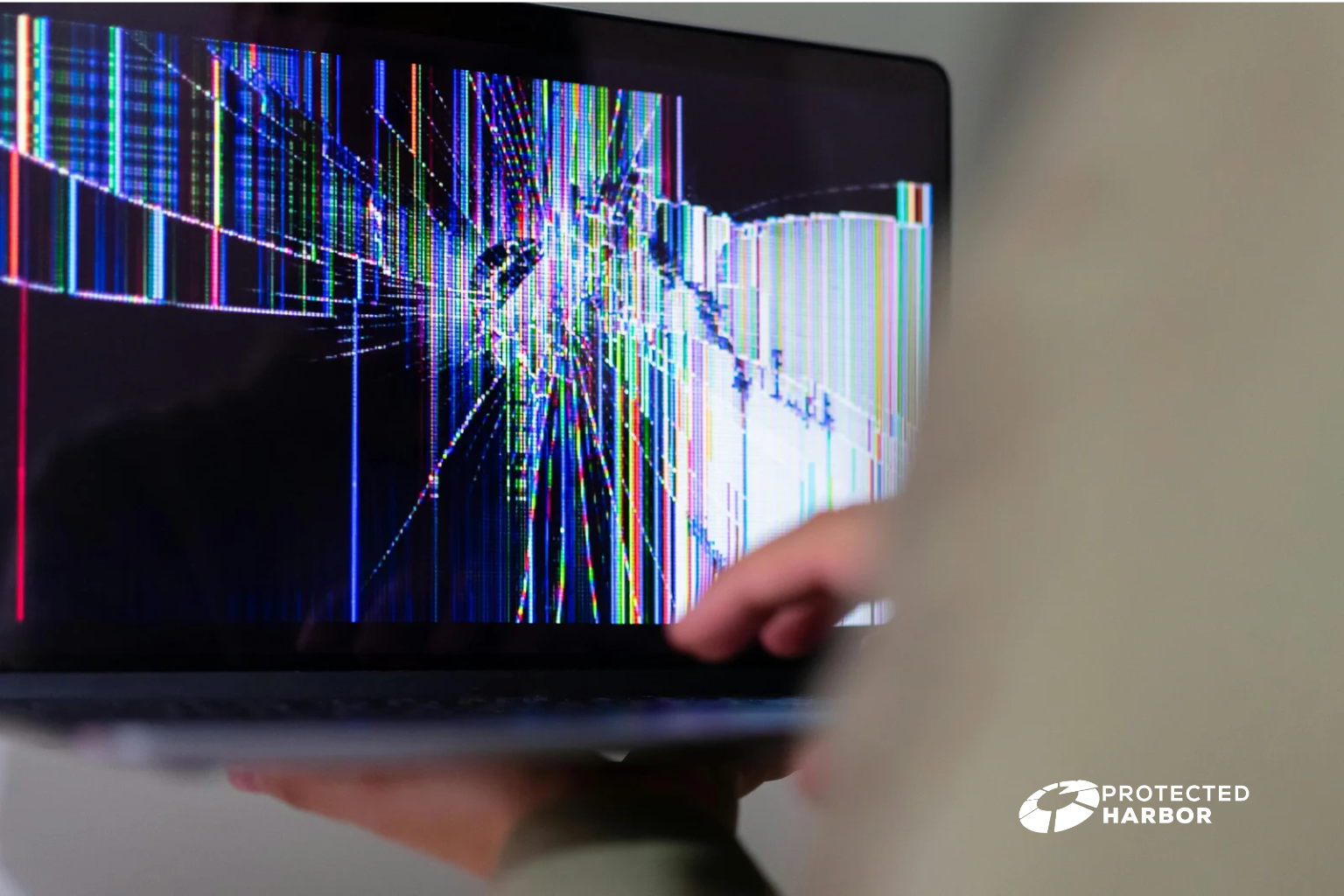
AI is changing the cybersecurity landscape. Increasingly accessible tools are making it easier to identify software vulnerabilities that have gone undetected for years. This creates new opportunities for attackers, but it also puts pressure on organizations to find and fix weaknesses before they can be exploited.
At Protected Harbor, we've observed an increase in attacks, so we recognize that organizations need to take emerging threats seriously. However, responding to security risks requires more than moving as quickly as possible.
When a critical vulnerability is discovered, the pressure to patch immediately can be significant. Yet rushing an update or infrastructure change without understanding its potential impact can introduce problems of its own. Software updates can create compatibility issues, and seemingly minor changes can disrupt connected systems. Sometimes, the rush to fix one problem creates another.
The answer isn't to delay critical security updates. It's to have the engineering processes, testing environments, documentation, and recovery procedures needed to deploy changes responsibly. Security and availability aren't competing priorities. Both are essential to a reliable technology environment.
Modern Infrastructure Requires a Bigger Picture
One reason operational mistakes can have such widespread consequences is the complexity of today's IT environments. Many organizations rely on infrastructure that has evolved over decades. New applications have been layered onto older systems, hardware has been replaced in stages, and software has been updated repeatedly. Over time, dependencies accumulate, configurations become harder to track, and institutional knowledge gets spread across different teams and vendors.
Specialization has its advantages, but problems arise when teams understand their individual responsibilities without understanding how their work affects the broader environment.
An application team might understand the software but not the underlying infrastructure. A network team might understand the hardware but not the business processes depending on it. A hosting provider might manage the servers without understanding how the applications running on them behave. When these pieces aren't connected, it's easy to overlook cause and effect.
A routine server update, network change, or software patch might make technical sense on its own. However, if the people making that change don't understand the systems and workflows depending on it, the consequences can extend far beyond the original task. Good IT operations require understanding not just what you're changing, but what that change could affect.
The recent outages show the weakness and fragility of the systems we rely on... The focus of Big Tech has become too spread out. Along the way they have forgotten the importance of resilience and durability.
How to Properly Maintain Your Technology
Maintaining technology is essential. Software needs to be patched, hardware needs to be updated, and infrastructure needs to evolve to address changing demands. But maintenance isn't simply about completing a technical task. It's about keeping the systems people depend on running reliably.
Consider the FAA disruption. When critical telecommunications infrastructure experiences problems, the consequences extend far beyond the IT department. Air traffic operations, airlines, airport personnel, and passengers are all affected. That's why the timing and execution of infrastructure changes matter.
The nationwide ground stop was caused by an issue that occurred during routine maintenance, but why perform potentially disruptive maintenance during periods of peak demand when a lower-traffic window might reduce the potential impact? Why prioritize an engineering schedule without considering the people and operations depending on the system?
It’s important to mention that not every maintenance activity can wait until after business hours. For example, critical security patches sometimes require immediate attention, but the potential impact should always be part of the decision.
At Protected Harbor, we don't schedule routine maintenance based on the convenience of our engineering team. We consider workload patterns, potential disruption, recovery requirements, and the consequences of making changes at a particular time. Reliable infrastructure requires that same level of thought at every stage. That means:
- Planning around operational impact: Consider when systems are being used and schedule potentially disruptive work accordingly.
- Understanding dependencies: Know how applications, servers, networking, and other infrastructure components interact before making changes.
- Testing before deployment: Identify compatibility issues and unexpected behavior before changes reach production whenever possible.
- Preparing for failure: Maintain verified backups, redundancy, rollback procedures, and documented recovery plans.
- Taking ownership: Measure success by whether systems continue to perform as expected, not simply whether a maintenance task was completed.
These aren't extraordinary measures. They're the fundamentals of responsible IT operations.
Don’t Be Afraid. Be Prepared.
The recent wave of outages has understandably created uncertainty. Businesses are questioning the reliability of their providers and becoming more aware of how dependent their operations are on technology. But fear isn't a strategy.
The answer isn't to stop adopting new technology or assume every provider will eventually fail. It's to take a more proactive approach to understanding and managing the risks that come with technology dependence.
Organizations should be asking themselves:
- Which systems and applications are most critical to our operations?
- What happens if one of our technology providers experiences an outage?
- Are our backups reliable, accessible, and regularly tested?
- Do we have a recovery plan, and has it actually been tested?
- Do our technology partners understand our environment and take responsibility when something goes wrong?
No organization can prevent every outage. What you can do is reduce the likelihood of preventable failures and limit the impact when disruptions occur. Fear doesn't prevent outages. Preparation limits their impact.
Reliability Is the Foundation of Innovation
The technology industry is moving quickly. AI, automation, and cloud computing are changing how businesses operate. But as we continue to pursue what's next, we cannot afford to neglect the fundamentals that make it all possible. A system isn't successful simply because it has the latest software or newest hardware. It's successful when it reliably performs the job it was designed to do.
At Protected Harbor, we believe infrastructure engineering should start with understanding what technology supports and who depends on it. That means looking beyond individual servers or applications to build and maintain environments that prioritize reliability, performance, and accountability.
We shouldn't have to choose between innovation and reliability. Innovation is only valuable when the underlying systems are dependable. The next outage shouldn't be the moment you start thinking about resilience. It should be something you've already prepared for.
Don’t let fear hold you back. Act now.